(from anthroposophy – aka Rudolf Steiner’s ‘Waldorf’ philosophy)
Sometimes when raising my own children, it was often difficult to know what the best response from me would be at certain times, or in certain situations. What would be a gift to my children rather than a hindrance?
There is so very much more to Rudolf Steiner’s elucidations than what I write of here, but these three foundational understandings were always helpful for me when I struggled with finding guidance at certain times, even for my students at school. We can think of these principles more as answering the question, what is the developmental imperative at this age? For the unfolding personality, what is the budding person thirsting for, or what is the unfolding human naturally sensitive to learning at this time?
These main foundational principles stretch over larger sweeps of time all the way to adulthood: from infancy to the change of milk teeth #1, from the beginning of the adult teeth to puberty #2, and from puberty to adulthood #3.
The first principle, from infancy to the change of milk teeth is GOODNESS. Let us immediately understand, ‘goodness’ does not refer to the old fashioned expired thought construct, expressed by the question – often asked by grandmas – “Is he a GOOD baby?” This question has everything to do with how convenient and pleasing the temperament of the baby is for us. This has nothing to do with ‘goodness’.
At the outset, GOODNESS, for the small child, has everything to do with building a foundational faith in the goodness of the world. Depending on what we focus on in this struggling world, we can see anything but goodness. There is much chaos, and even evil afoot in this world. Nevertheless, we must stand guard and make a golden protective shield around our child at this age (from birth to change of teeth) so that there is as much as possible a trust that the her world is safe and good for her, that adults are taking care of the problems, that good will prevail. This trust in the goodness and rightness of all things is what builds in the child the resilience and power to become in adulthood, the person who is working to set the conditions right.
This is why I feel that writing books for young children is a sacred trust. Books for young children can be measured by inspiration, written in spirit. They need to embody goodness given out of ourself. It is about connection to all others – people, animals and nature. Kindness, thoughtfulness, even reverence and gratitude must prevail. Sincerity should colour the book, not cynicism nor adult humour. On the whole, the books we read can certainly can be funny, but then others need to embody wholesomeness – that which is life-enhancing and nourishing.
Small children learn to be gentle with each other, to pet the cat gently, to take turns, to give something to someone. To say ‘Thank you’. They can learn to observe insect and birds, to touch gently the flowers. When they pick a flower they can also say ‘Thank you.’ They take their cue from us.
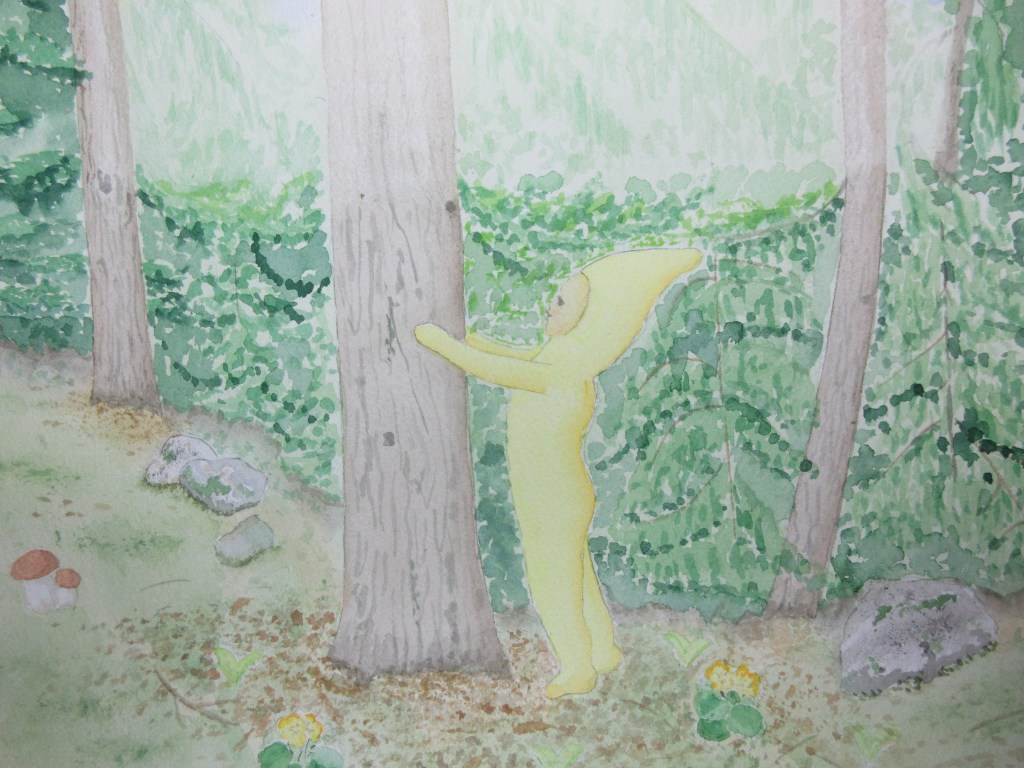
Eliore discovering thankfulness.
At this young and tender time of life, our books should be representing the world as safe and good. It is exactly this that gives power and strength in adulthood, a trust in their path to solve some of our real problems. We can not burden a little child with problems the adults have created when the child is as yet unformed.
 THE STAR CHILDREN BOOKS / INSPIRED BOOKS FOR CHILDREN