Have you ever driven in a car with a GPS that kept saying “Recalculating, recalculating” every time you chose a slightly different way?
In any case, this is what I have been doing since January – that time I wanted to write “Happy New Year” to everyone! (Recalculating, recalculating!) So instead now it’s “Happy Summer!” and maybe a better word is Course Correction. I think this comes up often in life. We have to assess and allow new inspirations to come in. This has happened to me lately in my intention and goal to write inspired books for children – to adjust things to be in alignment with my new understanding and vision. And this is needed a lot as the world changes literally beneath our feet! So some time ago ‘clearing the path’ was what was in front of me, and now what I have found is ‘course correction’.
We have to recalculate. We have to live ourselves to new answers. We cannot, as Albert Einstein said, solve the problems we have made with the same mindset that created them.
I have also been working to update my website in line with my new course correction, my new inspirations, but as I am a little ignorant technologically so that has taken time! One thing I am changing is “Lila’s Blog” – having realized I am not a blogger. Yes, sometimes I do want to write something, but when I feel like that, I am always working on a book so at those times, I don’t want to ‘blog’. So I thought, UPDATES would be more appropriate. Then I can let people know about upcoming events and developments.
I was connecting with some of the stores that feature my books, I once again connected with this beautiful website in Australia: https://www.celestialbooksandgifts.com.au
Such a nourishing, lovely, serene website that gives a lovely thumbnail explanation of our philosophy – those who feel Waldorf inspired, or as other countries call it, Steiner inspired. This concept of ‘nourishing’ the child, is not one which is naturally embodied in our schools and families, immersed as we so often are in materialism and focusing on left brained learning. Below is a small excerpt from their site:
NURTURE AND PROTECT CHILDHOOD
We believe in leaving children free of the burdens of modern and adult life; as such, we stock thoughtfully considered literature, gifts and toys which encourage children to wonder, explore, create and learn in an organic and developmentally appropriate way.
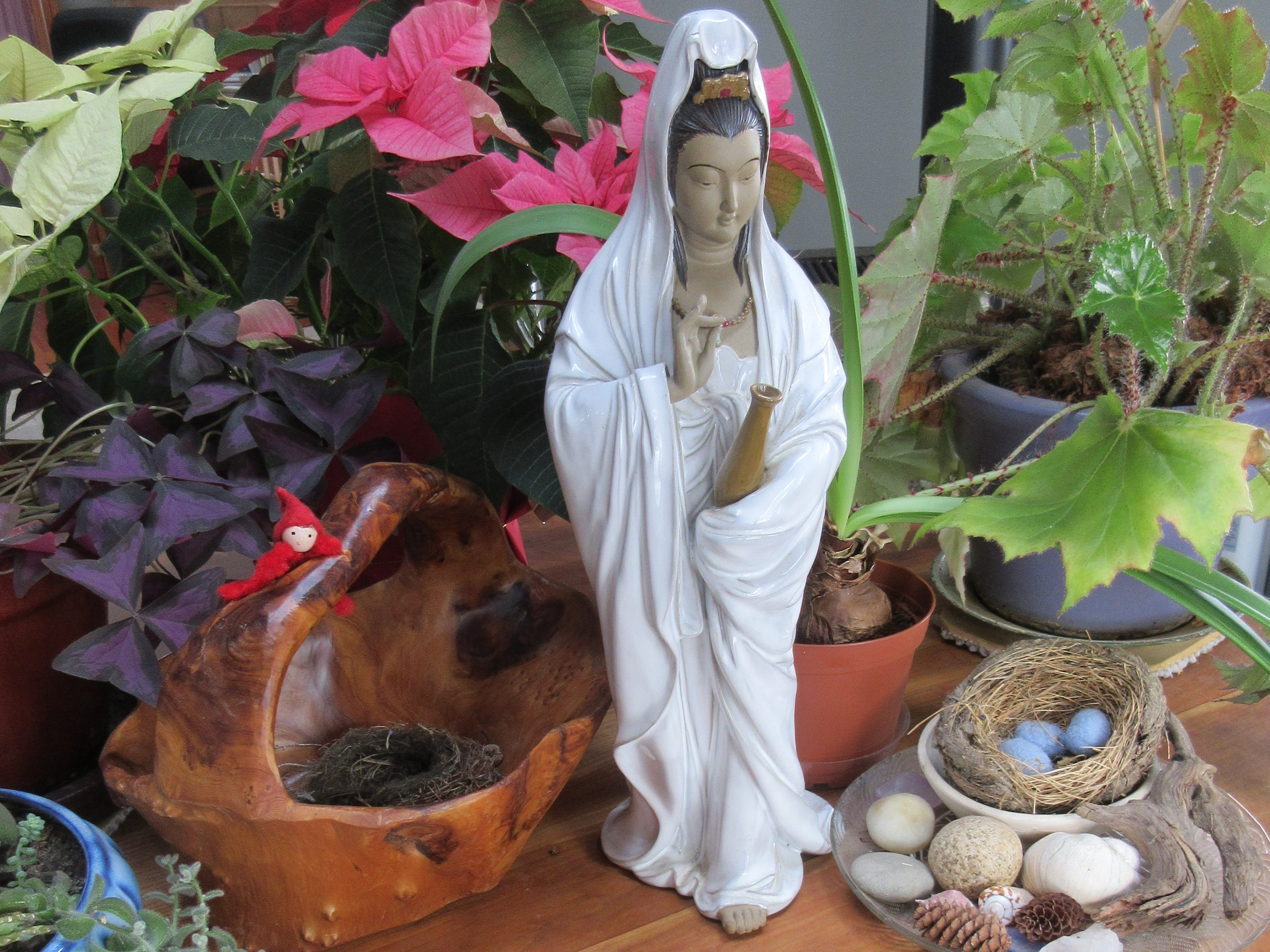
In case the last post featuring the Kwan Yin and the words “Helpful energies are available. Thank you!” brought on Eye Rolling from the rationally minded, here is my experience that is behind this post:
Kwan Yin (or in the case of The Star Children, The Mother-of-Us-All) represents an energy and intelligence in the universe that is nourishing, loving, helpful and creative. This has been known of in all religions that had a goddess form. The last vestige of her in this age is what we know as Mother Nature. The qualities of this intelligent energy is available to us universally through our silence, thankfulness, peacefulness, and positive faith.
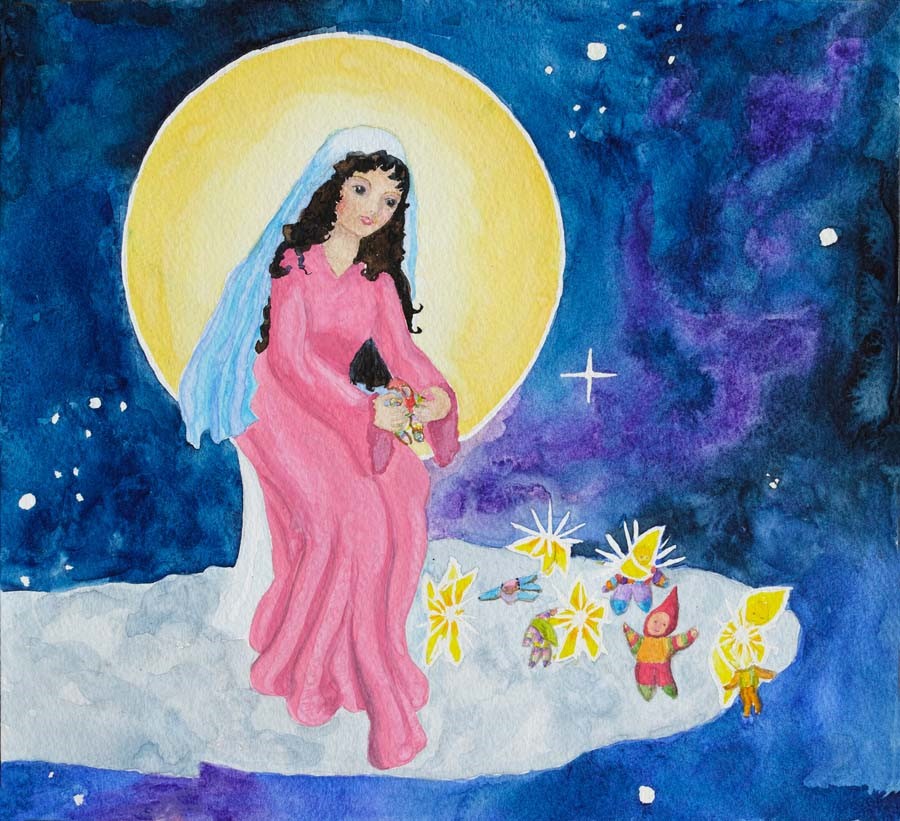
The Mother-of-Us-All had little suits for the star children to wear. Acquainting a young child with this reality can only work through personalized metaphor.
Happy Day! This is exciting and wonderful! A sale happened last year as well, and the response was heart warming.
I have got some new inspirations that won’t let go. Seems there are always surprising effects when one is grabbed like that. New visions are waiting in the wings!
Now we come to the third guiding principle as laid out by Rudolf Steiner. In the developmental journey of the child, in the time from puberty to adulthood, the quest for truth is the guiding principle.
The child has hopefully had an early childhood, filled with gentle loving caregivers who themselves have a moral integrity. By osmosis and imitation, the child comes to experience that goodness prevails, goodness is what we want to step into. The child hopefully develops faith in the world.
In the second phase, the middle years, the aspect of the child that yearns for nourishment is the sense for beauty, harmony and rhythmic activity. The child is responsive to creating something beautiful. What is needed is learning about the world and humankind in a rich, warm and beautiful way. Needless to say, there is very little food for this aspect to develop within our school system or the technological (entertainment) media. This part of the child may have become very shrunken.
Next, at puberty, with a sense for the ethical rightness of things, and with a sense for the beautiful, (although these are of course immature in development), the child’s mind desires to come awake. Truly, this is the time to develop thought, to look into things, to experiment, to find out for oneself about the truth of things. We might think of the need for the child to go their own way, to rebel, all because of the quest for truth. Often though, we may look with some horror at the way things are going with the teenager. We can remember the idea of “the quest for truth”, and that such things as the family’s “good name” or “what our family does” are actually not of developmental relevance to the teenager. We can suggest a wider search for consideration – to consider the other side of things, consider other ways to view something, consider the end result or consequences of actions.
Writing this (above), I have deeper sense of how Little Star and Eliore ended (an ending which I questioned in an earlier blog.) It was kind of a subconscious segue into the direction of my next book, a book for early adolescents. The attitude of Eliore is portrayed as one of humility and surrender to a larger principle. As we start to use our independent mind questing on our own, what can be more important than to balance our impulses and drives with some humility and surrender? If our minds can balance our single minded pursuit with other and larger considerations, it can often save us from disastrous pain later.
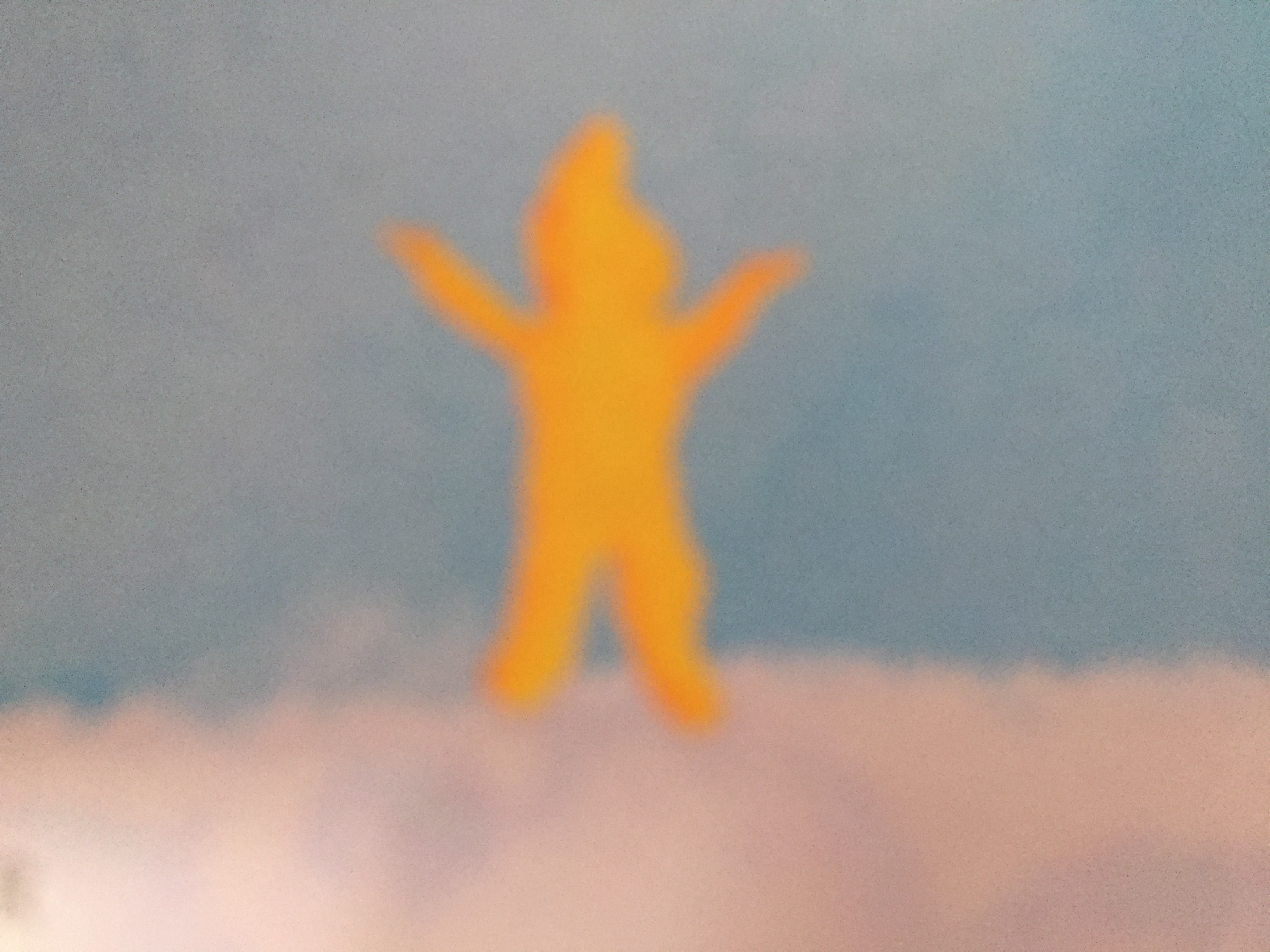
“I am here, Mother-of-Us-All” (Somehow turned into a very ethereal image, but still…)
GUIDING PRINCIPLE #2 in Rudolf Steiner’s philosophy (commonly called ‘Waldorf’) is BEAUTY. This is a guidance about the nourishment children are needing and are receptive to from the change of milk teeth to puberty. We can help the growing child focus on imbuing work and actions with beauty, with something more elevated, with an artistic response. This is a time that music lessons and lessons in art provide nourishment to the unfolding child. It is a time to cultivate refinement of their feeling world.
He was filled with joy at the magic the earth had created.
As an example we can see the intrinsic ability in the child to respond to nature’s beauty. This ability exists at least until it has been dampened or obliterated by our school systems and mass media.
It is daunting for me to try to encapsulate the teaching of Rudolph Steiner in this tiny summary, nor am I a scholar of anthroposophy that could intelligently put forth all the background meaning (which can be found on the internet). Nevertheless in my personal experience I did find for instance, that when I had a class of grade 1’s, they were able to respond so beautifully to their lessons being taught more imaginatively, more colourfully, and when I suggested we could try to make our work more beautiful, they were very responsive, and their work really was impressively beautiful. Similarly, when raising my boys, at times when I wondered, at the right response to some dilemma – “What is the right response to this?” – I often did fall back on endeavouring to elevate their feeling world, to imbue beauty into actions.
This is an interesting notion, and certainly a truth which our education system and our mass media does not offer our children. So I think in some ways they become crippled internally, for lack of what would really help them, or rather would have helped them at the time of their unfolding.
(from anthroposophy – aka Rudolf Steiner’s ‘Waldorf’ philosophy)
Sometimes when raising my own children, it was often difficult to know what the best response from me would be at certain times, or in certain situations. What would be a gift to my children rather than a hindrance?
There is so very much more to Rudolf Steiner’s elucidations than what I write of here, but these three foundational understandings were always helpful for me when I struggled with finding guidance at certain times, even for my students at school. We can think of these principles more as answering the question, what is the developmental imperative at this age? For the unfolding personality, what is the budding person thirsting for, or what is the unfolding human naturally sensitive to learning at this time?
These main foundational principles stretch over larger sweeps of time all the way to adulthood: from infancy to the change of milk teeth #1, from the beginning of the adult teeth to puberty #2, and from puberty to adulthood #3.
The first principle, from infancy to the change of milk teeth is GOODNESS. Let us immediately understand, ‘goodness’ does not refer to the old fashioned expired thought construct, expressed by the question – often asked by grandmas – “Is he a GOOD baby?” This question has everything to do with how convenient and pleasing the temperament of the baby is for us. This has nothing to do with ‘goodness’.
At the outset, GOODNESS, for the small child, has everything to do with building a foundational faith in the goodness of the world. Depending on what we focus on in this struggling world, we can see anything but goodness. There is much chaos, and even evil afoot in this world. Nevertheless, we must stand guard and make a golden protective shield around our child at this age (from birth to change of teeth) so that there is as much as possible a trust that the her world is safe and good for her, that adults are taking care of the problems, that good will prevail. This trust in the goodness and rightness of all things is what builds in the child the resilience and power to become in adulthood, the person who is working to set the conditions right.
This is why I feel that writing books for young children is a sacred trust. Books for young children can be measured by inspiration, written in spirit. They need to embody goodness given out of ourself. It is about connection to all others – people, animals and nature. Kindness, thoughtfulness, even reverence and gratitude must prevail. Sincerity should colour the book, not cynicism nor adult humour. On the whole, the books we read can certainly can be funny, but then others need to embody wholesomeness – that which is life-enhancing and nourishing.
Small children learn to be gentle with each other, to pet the cat gently, to take turns, to give something to someone. To say ‘Thank you’. They can learn to observe insect and birds, to touch gently the flowers. When they pick a flower they can also say ‘Thank you.’ They take their cue from us.
Eliore discovering thankfulness.
At this young and tender time of life, our books should be representing the world as safe and good. It is exactly this that gives power and strength in adulthood, a trust in their path to solve some of our real problems. We can not burden a little child with problems the adults have created when the child is as yet unformed.
How do we represent the world to our young children?
Long ago in 1971, a young woman wrote and illustrated Mary of Mile 18, a story representing the normal life of the children she was teaching, living in northern British Columbia. She felt it a loss that the children did not see their life reflected in the books around them. Similarly, we now have many books, written with the same intent, by authors, wanting to reflect indigenous life, or black lives, or immigrant lives, and I suppose also LGBTQ life (I don’t know all the add-ons). It is very important for children to see their own lives reflected, but also other lives, to widen their perspective.
If you look into anthroposophy, which is about the only philosophy for life I have found which includes guidance for young children, as well as the whole education system, agriculture, medicine and more within a framework that includes the presence of the inner worlds, we learn something more. Rudolf Steiner brought forth many guiding principles. The three simplest ones will come forth at my next writing.
It offers us another dimension to evaluate our children’s books, aside from also representing our lives as they are.
It may well be true that telling stories and the need of the child to hear the narrative of the human world he/she lives in is one of the most defining elements of being human. And so we must truly examine the quality and intent of the books we read as our little ones are becoming shaped. What is this book saying to the child? What is it representing? What is this book giving to our child? There is so much out there that is good and healthy, but there is also much that is poison, even evil, and there is a dearth of books representing the wholeness of our greater world, that which includes the hidden worlds.
Particularly for me, when reading the books my grandchildren are exposed to, I see only the material world represented. There is not even a hint of the spiritual ever alluded to. Think how many toddler books there are focussed on language development, pictures of concrete objects and animals, even also now wonderful books teaching feeling words.
But children have come to us from the worlds of light, “trailing clouds of glory” (I believe Wordsworth said), and how is it for them to be deadened and confined to this material pushbutton reality, whose only aim is to satisfy our senses and create desire. Without the attention paid to the streams of glory, how can the children have words, a language, to relate to their inner perceptions and quickly diminishing realities as they are immersed and acculturated to this world as we have made it to be. They came to us touched by the divine, how can we nourish that?
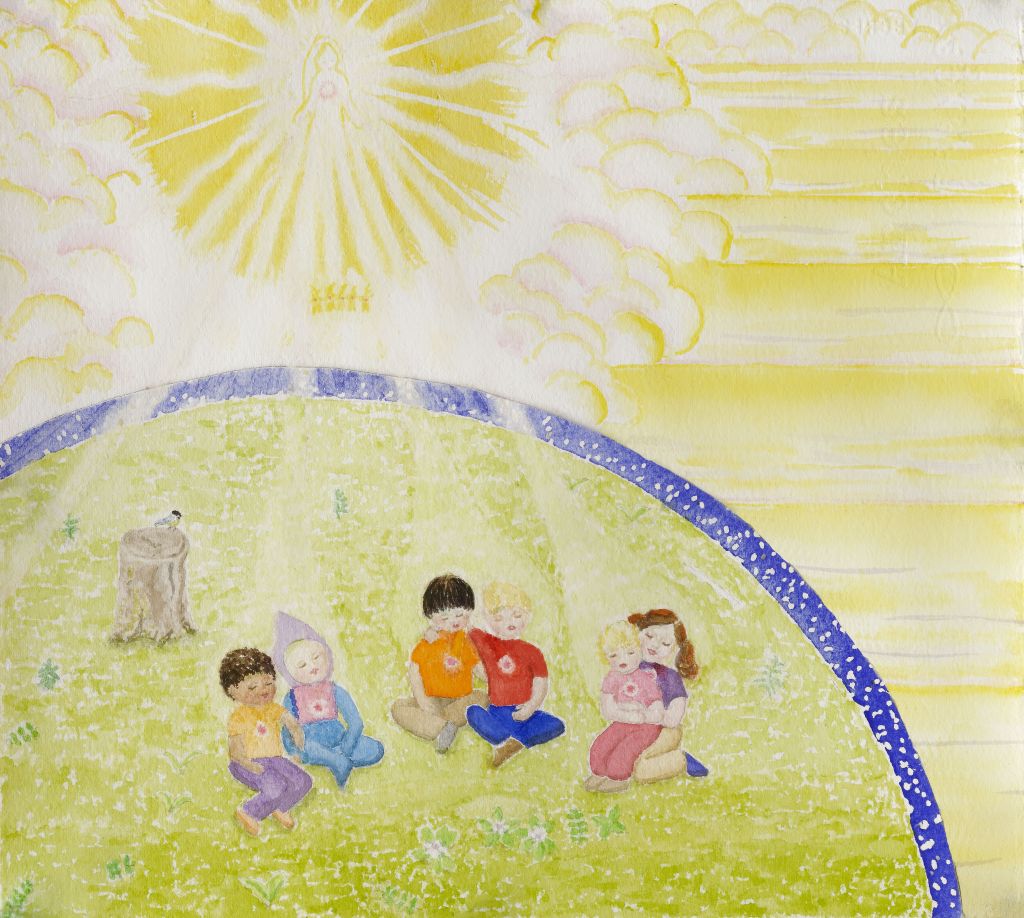
How to portray the ineffable Oneness of the hidden inner worlds?
Below are my attempt at the worlds of light. This is from Little Star and Eliore, when the children are touched by the inner worlds because of the state of loving surrender they are in – so earnestly singing for a dead baby bird.
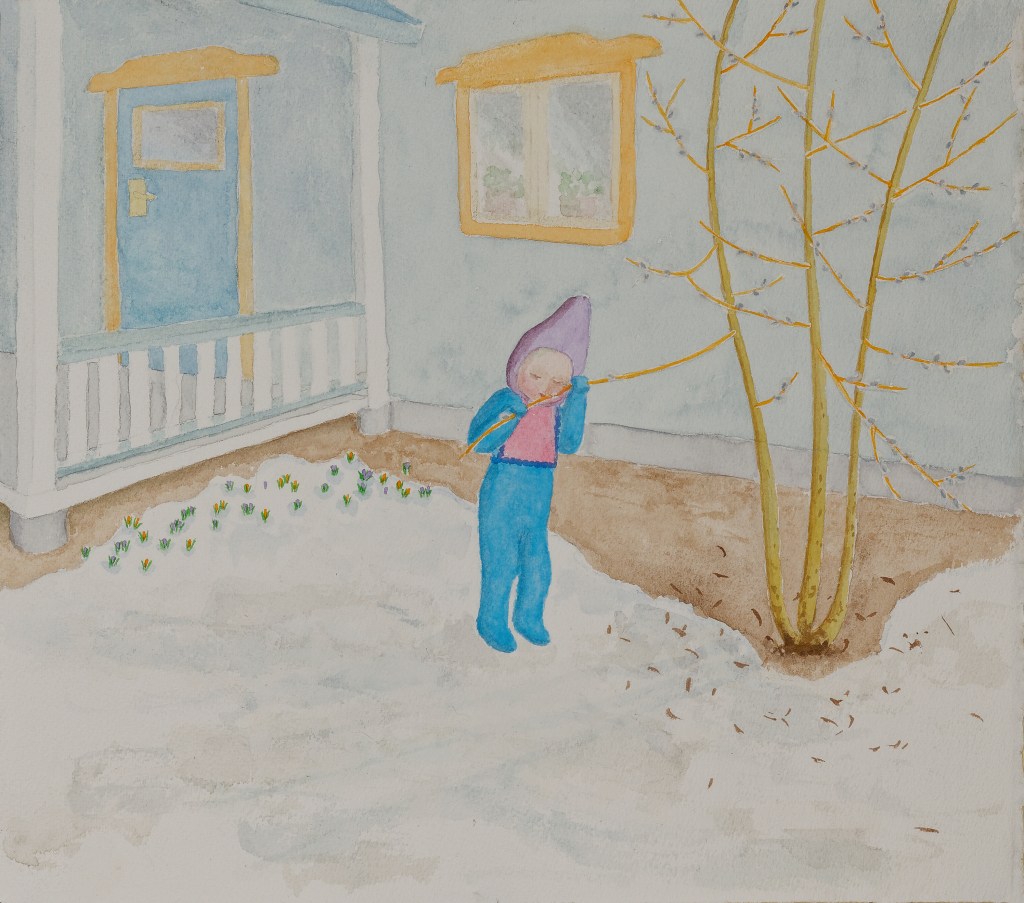
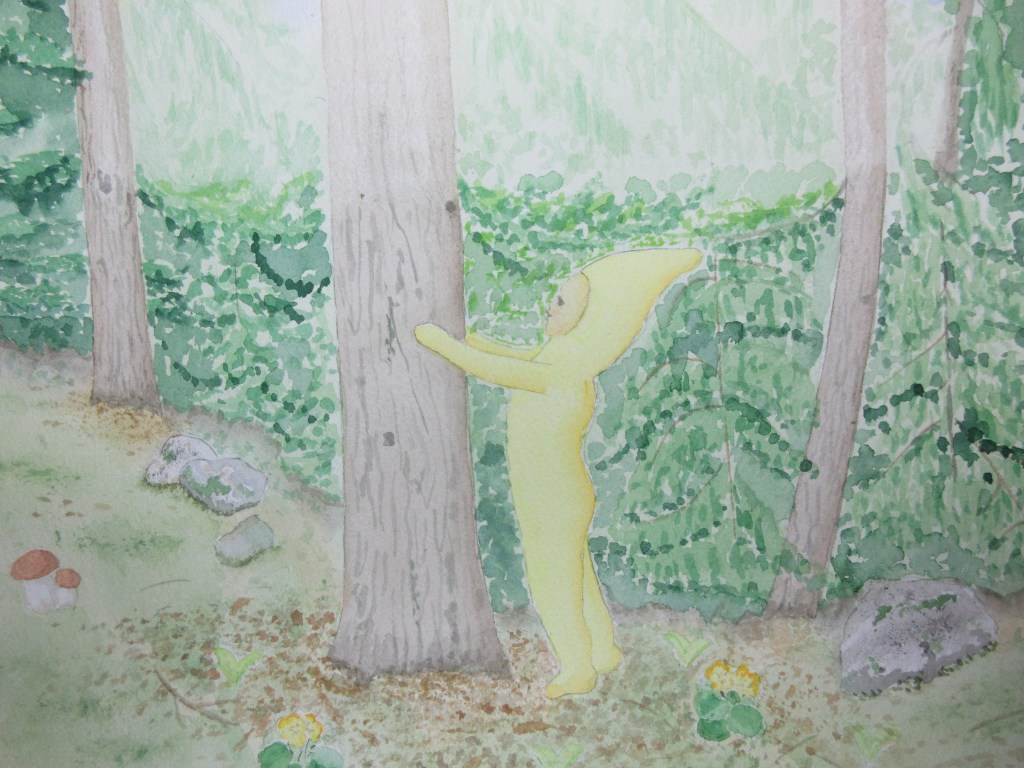
 THE STAR CHILDREN BOOKS / INSPIRED BOOKS FOR CHILDREN